
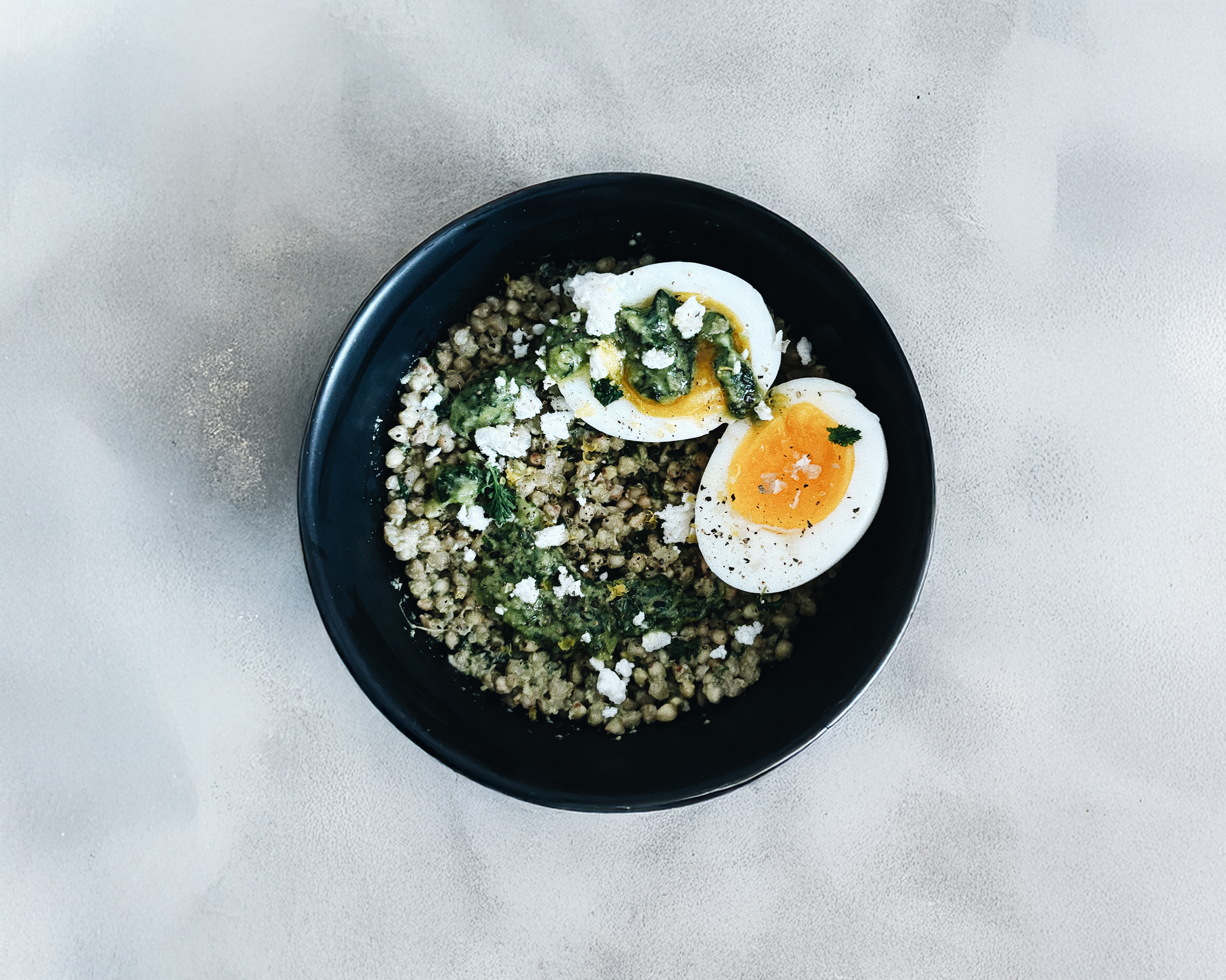
Pesto Buckwheat with Jammy Eggs & Feta
For when serotonin has left the chat
Prep time: 10 min | Cook time: 20 minutes | Total time: 30 minutes | Difficulty: 2/5
This pesto buckwheat is a composed grain dish built around texture, fat, and timing — not shortcuts.
Buckwheat is cooked until just tender, then dressed while warm so it absorbs the pesto rather than sitting underneath it. The eggs are jammy by design, providing richness and structure, and the final balance depends on seasoning and temperature more than on garnish.
This recipe comes from my Substack, where I write in detail about technique, sequencing, and the logic behind each step. What’s published here is the public version.
Ingredients (serves 1, generously)
Buckwheat
Buckwheat groats 70 g / ½ cup
Vegetable or chicken stock 250 ml / 1 cup
Jammy eggs
Eggs 1-2, depending on hunger levels
Pesto
Pine nuts 15 g / 2 tbsp
Garlic 1 small clove
Anchovy fillet 1 (optional, but amazing)
Fresh basil leaves 20 g / about ¾ packed cup
Parmigiano Reggiano 25–30 g / 1 oz
Extra-virgin olive oil 50–60 ml / 3–4 tbsp
Fine sea salt to taste (might skip altogether if your anchovy is very salty)
To finish
Feta 15–20 g / ½ oz
Extra-virgin olive oil a drizzle
Freshly ground black pepper to taste
Lemon zest a tiny bit, optional
Equipment
Small saucepan
Fine sieve
Mortar and pestle (or small food processor, if you must)
Frying pan
Mixing spoon
Method
Cook the buckwheat
Rinse the buckwheat thoroughly. Bring the stock to a boil, add the buckwheat, then reduce to a simmer and cook for 10–12 minutes, until tender but still with a bit of bite. Drain well and let it steam-dry for a minute before setting aside.Cook the jammy eggs
Bring a small pot of water to a rolling boil. Gently lower in the eggs and cook for 6½–7 minutes. Transfer immediately to cold water, then peel once cool enough to handle. Halve just before serving.Toast the pine nuts
Place the pine nuts in a dry pan over medium heat and toast until lightly golden and fragrant. Remove from the heat and allow to cool slightly.Start the pesto base
In a mortar and pestle, crush the garlic and anchovy into a smooth paste. This forms the backbone of the pesto and should be fully broken down before moving on.Build the pesto
Add the toasted pine nuts and grind until mostly smooth. Add the basil in batches, bruising gently until broken down. Stir in the Parmigiano, then slowly stream in the olive oil until the pesto is glossy and spoonable. Taste and adjust salt.Finish the buckwheat
Heat a pan over medium heat and add the cooked buckwheat. Warm through, then stir in 1–2 tablespoons of pesto along with a splash of hot water or stock to evenly coat the grains. Remove from the heat once glossy.Assemble
Spoon the pesto-glazed buckwheat into a bowl. Top with the egg halves, yolks facing up. Crumble a small amount of feta over the top, then finish with a drizzle of raw pesto, olive oil, black pepper, and optional lemon zest.
Substack subscribers get Chef’s Notes for every recipe.
That’s where I explain why things are done a certain way, what can go wrong, and how to adapt the recipe when your ingredients, energy levels, or will to live aren’t ideal. Substitutions that actually work. Texture fixes. Salt logic. Timing cheats.
The goal isn’t to make you cook like a chef. It’s to make the recipe resilient — so it still works when you’re tired, distracted, or cooking on autopilot.
If that sounds useful (and it usually is), the notes live on Substack.